
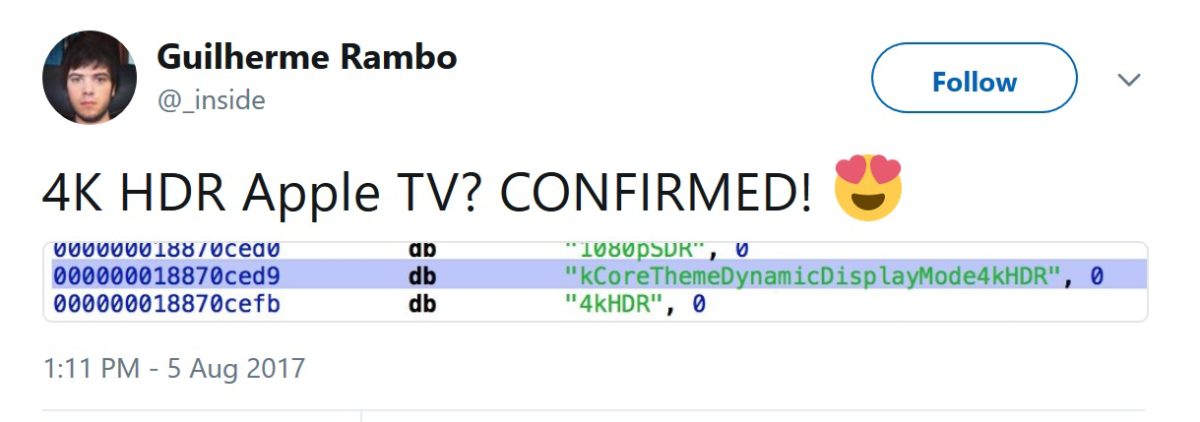
Guilherme Rambo has in a tweet shown future Apple TV functionality hidden in the Apple HomePod firmware, showing support for 4K as well as Dolby Vision and HDR 10. He is till digging through the firmware, go to his tweet page to learn more.
Next up: Intelligent AR glasses
Microsoft and Google are deep in the trenches planning the next generation of their Google Glass / Microsoft HoloLens respectively. They have both learned from the failure of the first generation of Google Glass and the lack of adaptation in the consumer space. They have thus refocused on the corporate sector, with slightly different approaches. Whereas Google’s post talks about the adaptation of Glass (Here refereed to as Glass Enterprise Edition) to corporate use without to much new features, Microsoft has a focus in AI integration into the next generation of HoloLens and are making their own AR chip. This focus on AR and the downplaying of the importance of VR may have an impact on companies trying to make the VR market. Will it (for now) only be a gaming thing?
Do you have one of the 306,000,000 passwords already hacked?

Troy Hunt (of Have I Been Pwned) has made his collection of 306 million pawned hashes available online with a detailed explanation of the collection of the broken passwords, the sources and a general run through of NIST suggested strategies to make you passwords more safe.
For the inpatient ones the simple approach is to go straight for the checker and see if your password has already been pawned. My current password pass the test, but a worrying amount of my older and simpler passwords are all positive as pawned.
Mozilla’s plans to fight Chrome (and survive)
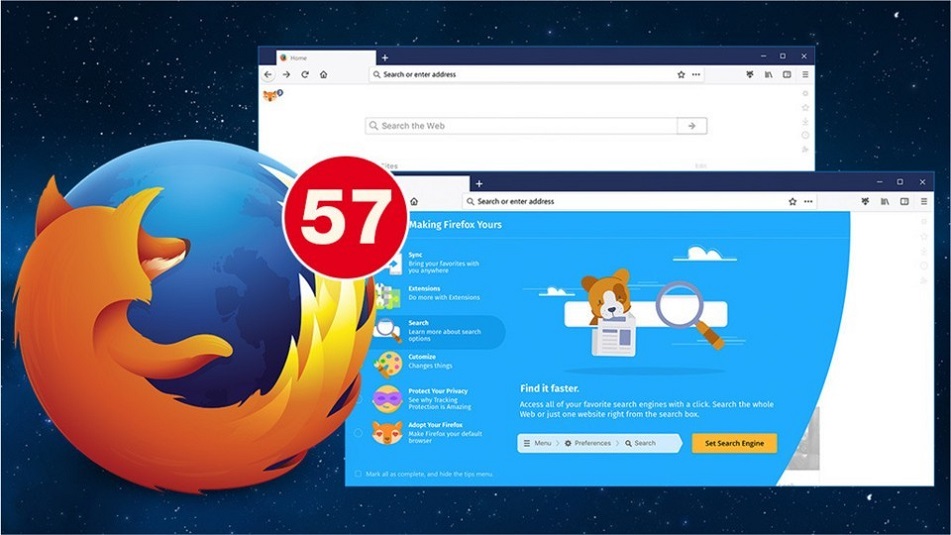
I have been a fan of Mozilla’s Firefox sine the start. Their early adaptions of plug-ins gave a level of control no other browser offered. Controlling scripts and flash, managing cookies and trackers have all been useful. It did however over time become a resource hog, and it’s market penetration has been in free fall lately. A special report on C-Net looks at how Mozilla in November, with the release of Firefox 57, intends to go to war with Google Chrome to regain its lost market share.
An uphill struggle no doubt, but 57 looks like it contains a lot of issues addressed that has led me to also use Chrome for easy internet tasks. I will join the beta program once available and will post my opinions after using it for a while.
Microsoft Eye Control for Windows 10
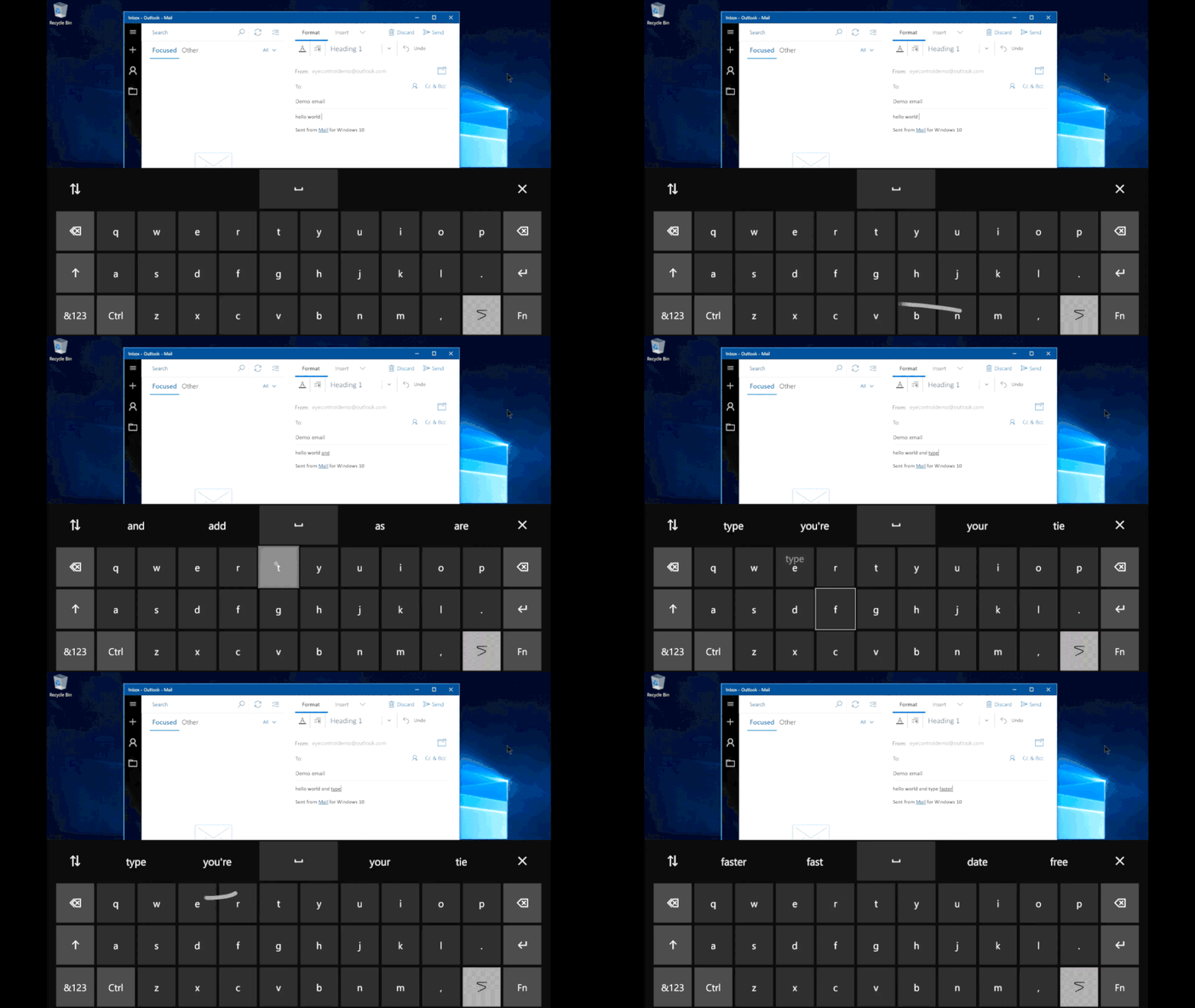
A challenge raised to Microsoft first Hackathon from Steve Gleason (Ex NFL Player with ALS) to find a solution for ALS sufferers to access and use computers, in particular in the advanced stages of ALS where eye control is the only bodily function still under the patients control. A hack team under the moniker “Ability Eye Gaze” took on the challenge and ended up demoing a fully functional wheelchair completely managed by your eyes.
Satya Nadella announced the project as the winner of the 2014 Hackathon. When the core windows team looked closer at the design an team was assigned to look at the feasibility of implementing it in Windows as a standard feature.
At the start of this years Hackathon Satya announced that the solution has been integrated into Windows 10 as “Eye Control” and is targeted for release in this years Fall Update. Requires fairly specialized HW to work, but has a lot of potential. Combine this with voice control, and we are one step closer to dumping our Keyboards snf Mouses.
Who will pay for the cost of the new Hi-Def Video Codecs?
Dan Rayburn (of Frost & Sulivan) has just written an interesting blog entry on Streaming Media about the impacts of Apple supporting H265 from High Sierra and the Google V9 codec market adaptation (and coming high end Codecs). He makes a theoretical calculation (heavily argued over in the comment section) on the costs for the Steamers of upgrading their front ends to handle the increased processing needs for these and future codecs. The suggested conclusion of a worst case cost increase of 50.0000% seems excessive (and is argued over) but as a user of x265 I can vouch for the impacts on the clients, my CPU loads are rarely under 90% across all cores when playing high end x265 files. It is a worthwhile thing to think about, in particular when 4K + resolutions are becoming more common. It is also worth contemplating that the cost will (one way or another) come back to the consumer. What we gain in less bandwidth we will most likely pay for in the cost of more processing from the streamers and providers.
Intel’s Coffee Lake CPU’s will not work with today’s Z270 Motherboards
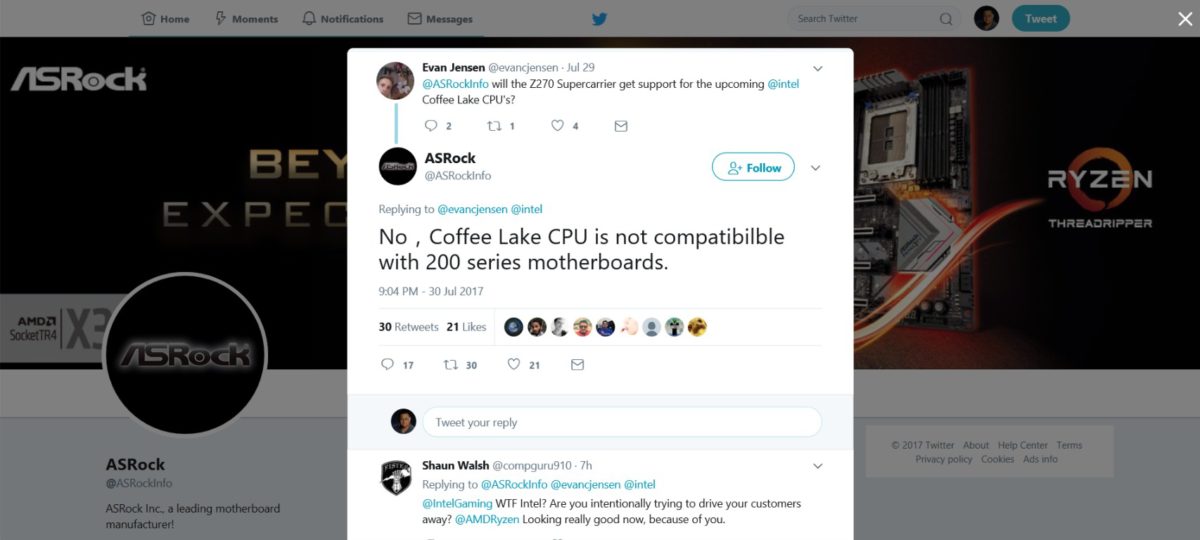
PC World quotes a tweet reply from Asrok confirming that the Coffeee Lake CPU’s will not be compatible with the current Z270 motherboards. This does not impact consumers directly, but has a massive impact on home builders and the need to update to a Z370 motherboards for further CPU upgrades. Nice, if true, for AMD and their new Ryzen CPU’s that works with the z270 boards. Is AMD coming back as a contender?
Google puts another bid for Snapchat
You may remember that in 2011 Google offered to buy Snapchat for 3 Billion USD and was rejected. According to Techcruch Goggle are again proposing to acquire Snapchat, this time for 30 Billion USD, to pre-empt the pending Snapchat IPO. Thats 60% of the current market value of General Motors for a company that has yet to produce a profit. I get flashbacks to the AOL – Time Warner merger, and hope this one turns out better!
Future life in South Asia and Global Warming

A somewhat sobering research report has been published by Science Magazine on the potential impacts of Global Warming on South Asia. The conclusion is stated as “Previous work has shown that a wet-bulb temperature of 35°C can be considered an upper limit on human survivability. On the basis of an ensemble of high-resolution climate change simulations, we project that extremes of wet-bulb temperature in South Asia are likely to approach and, in a few locations, exceed this critical threshold by the late 21st century under the business-as-usual scenario”. Yet we fight the concept of Global Warming and pass the cost over to our children and their children.
The cost of unlimited data plans on customers in the US

Opensignal has just released their “State of Mobile Networks: USA” for August of this year. The volumes created by the unlimited data plans are eating up the networks capacity, with less than ideal impacts in the users with ever depreciating speeds as an outcome.
This will at some stage have to be addressed, an yet another shot across the bow of Net Neutrality – We need a way to shape the traffic to enable a more satisfactory end user experience, and to let people pay for prioritized use. Can this lead to a final universal adaptation of IP6?